

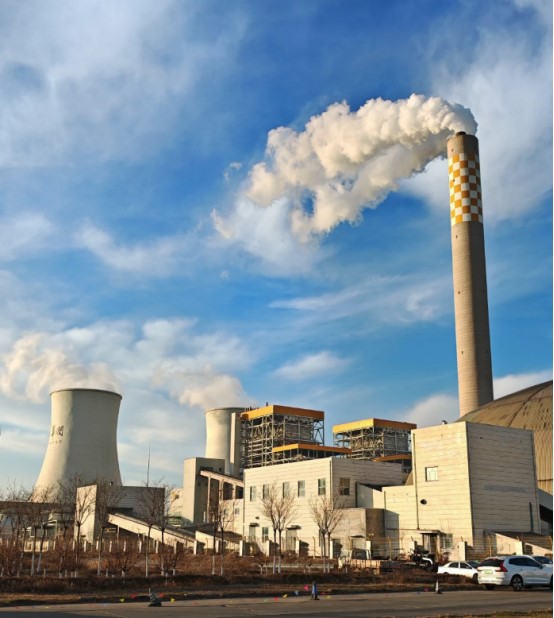
Thermal power plant is a facility that uses coal, oil, natural gas and other fuels to generate heat energy, and then converts it into electric energy. As one of the most important power sources in the world at present, thermal power generation has the advantages of mature technology, stable power generation and large scale, and plays an important role in base-load power supply.
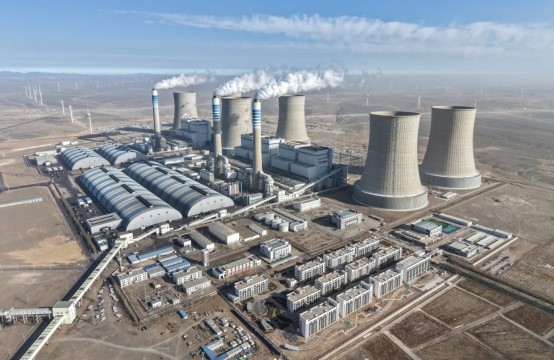

Advantages & Key Features
High temperature and high pressure resistance
Steel has excellent high temperature and pressure resistance, and is suitable for key components such as boilers, steam pipes and steam turbines. Steel can still maintain good mechanical strength and stability in high temperature environment, ensuring the safe operation of equipment.
Structural strength and durability
Power plant structures, such as steel frames, chimneys and coal conveying systems, need to bear huge loads and be used for a long time. The high strength and fatigue resistance of steel ensure the stability and long life of power plant structures.
Corrosion resistance and oxidation resistance
In corrosive environments such as flue gas desulfurization and smoke exhaust, special steel (such as stainless steel and heat-resistant steel) can effectively resist corrosion and oxidation, and reduce the frequency and cost of equipment maintenance.
Machinability and weldability
Steel is easy to cut, shape and weld, and it is convenient to manufacture complex components such as pipe elbows, pressure vessels, etc., and improve the efficiency of power plant construction and transformation.
Typical Applications
High-strength alloy steel is widely used in boiler systems in coal-fired power plants to ensure safe and stable operation at high temperature and high pressure; Heat-resistant steel is used in steam transmission pipeline to reduce heat loss and prolong service life; The steel structure workshop and supporting system adopt ordinary structural steel to ensure the stability and economy of the whole building.
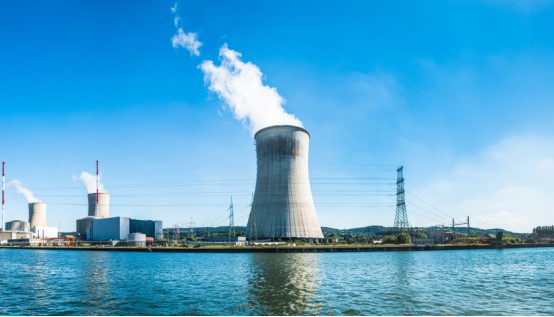
Nuclear power uses the energy released from nuclear fission reactions to generate steam, which drives turbines to produce electricity. As an efficient and low-carbon energy source, nuclear power, while providing stable base-load power, imposes extremely high requirements on equipment safety, reliability, and material performance.
Advantages & Key Features
Extremely high security and reliability
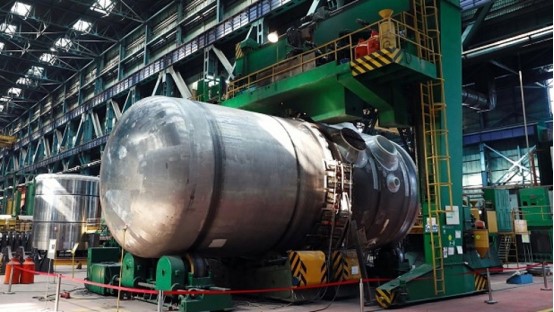
Nuclear power equipment, such as reactor pressure vessel, steam generator and main pipeline, must withstand extreme high temperature, high pressure and radiation environment. Special steel (such as SA508 alloy steel) has excellent radiation embrittlement resistance, low thermal expansion coefficient and high toughness, which ensures the long-term safe operation of nuclear power plants.
Corrosion resistance and radiation resistance
The inside of a nuclear reactor is exposed to high temperature and high pressure water or coolant for a long time, so the steel should have good corrosion resistance and radiation damage resistance to avoid the risk of leakage caused by material deterioration.
Strict material purity and uniformity
Steel for nuclear power needs to undergo strict smelting and quality inspection to ensure low impurity content and uniform structure and prevent local defects or crack propagation in radiation environment.
Long-term service stability
The design life of nuclear power plants often reaches 40-60 years, and the steel can still maintain stable performance under the long-term coupling effect of heat, force and radiation, reducing the need for replacement and maintenance.
Typical Applications
The reactor pressure vessel is made of high-strength low-alloy steel and lined with stainless steel to enhance corrosion resistance; Austenitic stainless steel is used in the main coolant pipeline to ensure the safety of coolant transportation; The steel structure of the nuclear island adopts seismic design steel to improve the overall safety of the power station.
Renewable energy systems, including wind energy, solar energy and water energy, are clean and sustainable, and are an important direction of global energy transformation. Steel plays an irreplaceable role in the structural support of renewable energy equipment and the manufacture of key components.
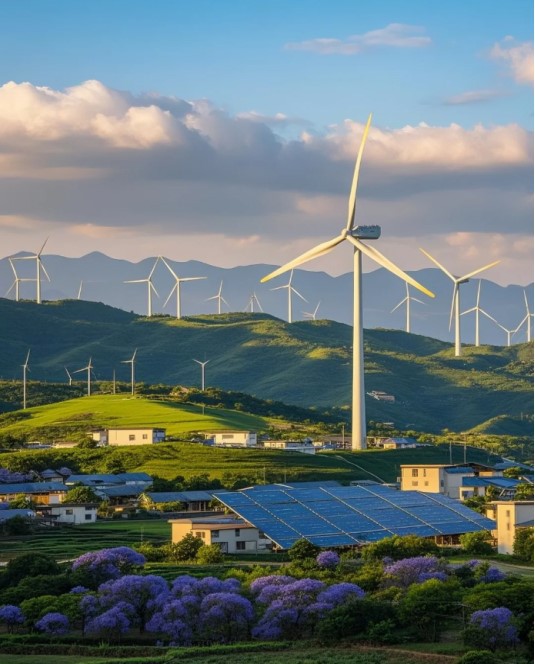
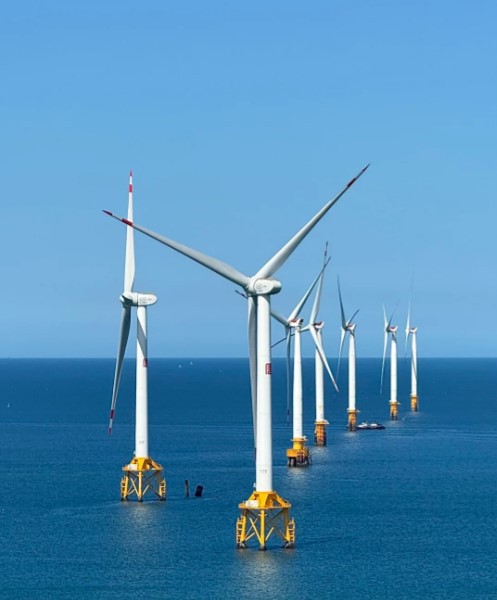
Wind power generation uses wind turbines to convert wind energy into electrical energy, mainly consisting of parts such as the tower, nacelle, blades, and foundation.
Advantages & Key Features
High strength and lightweight design
Fan towers are mostly made of high-strength structural steel plates, which can reduce the weight and transportation and installation costs while ensuring the bearing capacity.
Fatigue resistance and weather resistance
The fan bears alternating wind load for a long time, and the steel has good fatigue resistance and atmospheric corrosion resistance, which is suitable for use in various environments such as oceans and mountains.
Good plasticity and easy molding.
The conical structure and flange connection of the tower can be easily realized by bending and welding of steel, which ensures the structural accuracy and tightness.
Economy and recyclability
The cost of steel is relatively low, and it can be completely recycled, which conforms to the whole life cycle environmental protection concept of renewable energy system.
Typical Applications
The tower of wind turbine adopts Q345 or S355 series structural steel, which is fabricated in sections and assembled on site. The engine room frame and base are welded steel structures to support heavy parts such as gear box and generator. Thick-walled steel pipe piles are widely used in offshore wind power foundations such as single piles and jackets, which are resistant to seawater corrosion and convenient to construct.
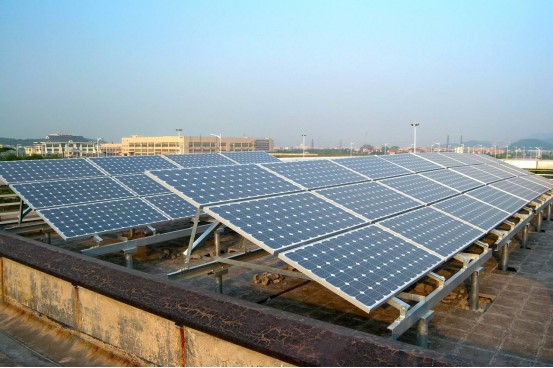
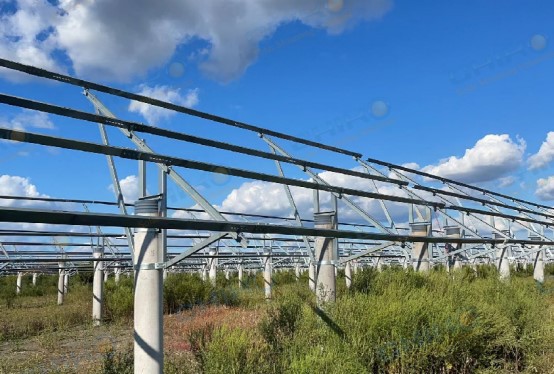
Photovoltaic system directly converts light energy into electric energy through solar panels, mainly including bracket system, inverter cabinet and supporting structure.
Advantages & Key Features
Stable structure and strong weather resistance
Photovoltaic brackets are often made of hot-dip galvanized steel or aluminum alloy. Steel provides higher strength, sand resistance and corrosion resistance, and is especially suitable for large-scale ground power stations and harsh environments.
Flexible adjustment and convenient installation
The steel bracket can realize angle adjustment to track the sun's position, and the modular design is convenient for rapid installation and later maintenance.
Cost-effective
Compared with aluminum, steel has more cost advantages in large-scale photovoltaic projects, while providing longer service life and lower maintenance requirements.
Strong bearing capacity
For applications such as BIPV (Building Integrated Photovoltaic) or carport Photovoltaic, steel can be better integrated into the building structure, bearing snow load, wind load and equipment weight.
Typical Applications
The ground photovoltaic support system adopts cold-formed steel such as C-beam and U-beam, and its surface is galvanized. Most distributed photovoltaic supports on the roof use light steel structures to adapt to different roof forms; The photovoltaic inverter cabinet and transformer shell are made of steel plates to provide electromagnetic shielding and mechanical protection.
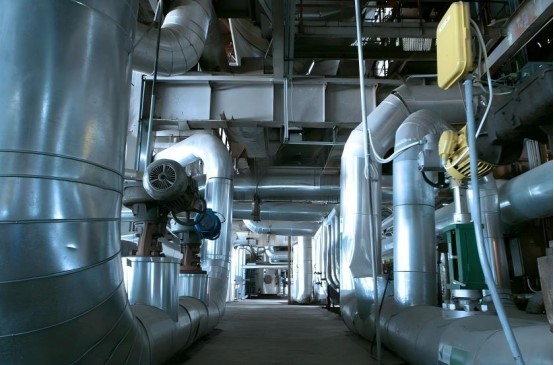
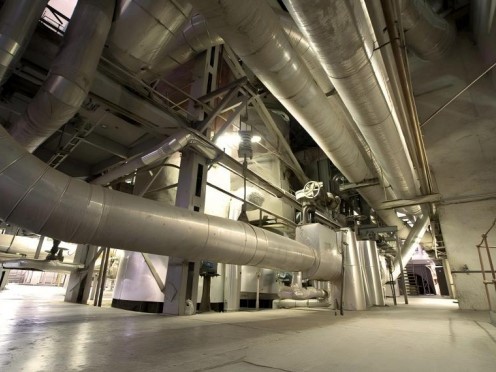
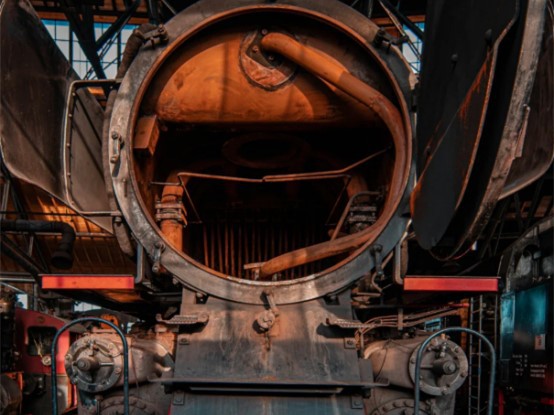
Power plant equipment and piping system are the "blood vessels" and "organs" of power production, which undertake key functions such as fuel transportation, medium transmission, energy conversion and emission treatment. From the main equipment such as boilers, steam turbines and generators to the intricate network of steam, water supply, cooling and flue gas pipelines, they together constitute the material basis for the efficient and safe operation of power plants. Because of its excellent comprehensive performance, steel has become the first choice for manufacturing these equipment and pipelines.
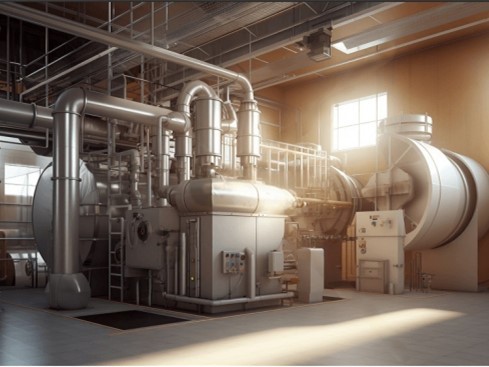
Advantages & Key Features
Excellent pressure and temperature bearing capacity
Power plants operate under extreme conditions of high temperature and high pressure. Key equipment such as boilers, pressure vessels and main steam pipes must withstand high temperatures of hundreds of degrees Celsius and pressures of tens of MPa. Special alloy steel (such as P91/P92 steel) has excellent high-temperature durable strength and creep resistance, which can ensure the safe and stable operation of equipment within the design life and prevent explosion or leakage accidents caused by material failure.
Excellent corrosion resistance and erosion resistance
Power plant media are complex and diverse, including high-temperature steam, chemically treated water, combustion flue gas (containing sulfide and nitrogen oxides), etc., which are extremely corrosive to materials. By using stainless steel (such as 304 and 316L), heat-resistant steel or carbon steel lined with anti-corrosion coating/lining, uniform corrosion, pitting corrosion, stress corrosion cracking and fly ash wear can be effectively resisted, and the maintenance cycle and service life of equipment and pipelines can be greatly prolonged.
Good machinability and welding performance
Power plant equipment and pipelines are complex in structure and huge in size. The good plasticity, toughness and weldability of steel make it feasible and efficient to roll and form the head of large pressure vessels (such as deaerator and condenser) and to butt-joint and weld in field pipeline laying. Advanced welding technology can ensure that the weld has the performance matching with the base metal and ensure the integrity of the system.
High structural strength and stability
Equipment support frame, large storage tanks (such as coal bunker and oil tank), flue and other structures need to bear huge static load, dynamic load, wind load and earthquake load. Structural steels (such as Q235B and Q345R) have high strength-to-weight ratio, which can build a stable and reliable support system and ensure the long-term alignment accuracy and overall stability of equipment.
High degree of economy and standardization
The steel products range from ordinary carbon steel to advanced alloy steel, which can meet different working conditions and budget requirements. Mature smelting and rolling technology and extensive market supply make it have obvious cost advantages. At the same time, power plant steel and products (such as pipes, flanges and valves) have formed a perfect international and domestic standard system (such as ASME and GB), which is convenient for design selection, procurement and quality control.
Typical Applications
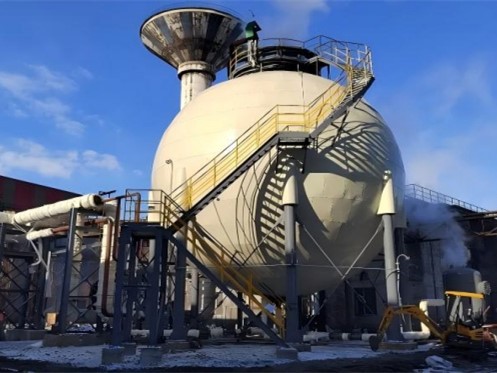
High temperature and high pressure steam system
The high-temperature and high-pressure steam system in the power plant is like the "aorta" of the human body. Its core products-alloy steel main steam pipes, high temperature and high pressure valves, etc.-are specially responsible for transporting the "strongest energy" steam generated by boilers to steam turbines safely and reliably, and are the "main force" driving the whole power plant to generate electricity.
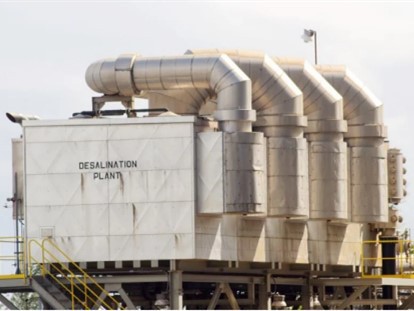
Fuel transportation and treatment system (taking coal-fired power plant as an example)
In this application, wear-resistant steel such as high chromium alloy is selected, and its core advantage lies in its hardness far exceeding that of ordinary steel, which can resist the extreme wear caused by high-speed scouring of pulverized coal and prolong the service life of the pipeline by dozens of times. This fundamentally eliminates the leakage and safety risk of pulverized coal caused by wear-through, and at the same time ensures stable and smooth transportation.
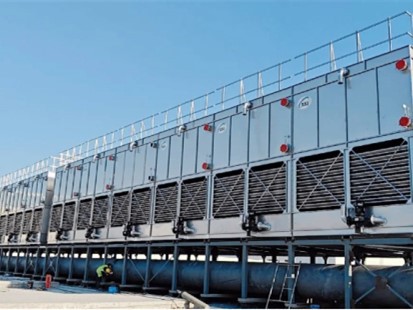
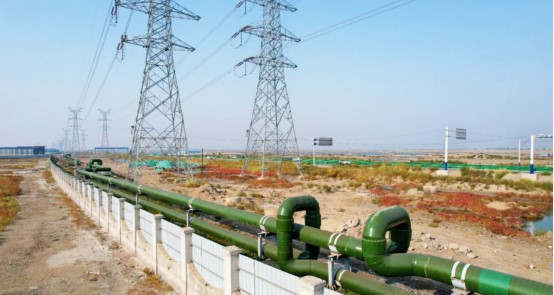
Circulating cooling water system
The core products such as large-diameter steel pipe or glass fiber reinforced plastic pipe, circulating water pump and condenser titanium pipe are selected in the circulating water system of power plant. Its fundamental advantage lies in its ability to transport massive cooling water efficiently and reliably. The steel pipe has high strength, good bearing capacity, corrosion resistance and long service life. With excellent seawater corrosion resistance and thermal conductivity, the titanium tube of condenser greatly improves the heat exchange efficiency and vacuum degree of condenser while ensuring the long-term stable operation of the system, which is the key to ensure the thermal efficiency and safe operation of power plant.